
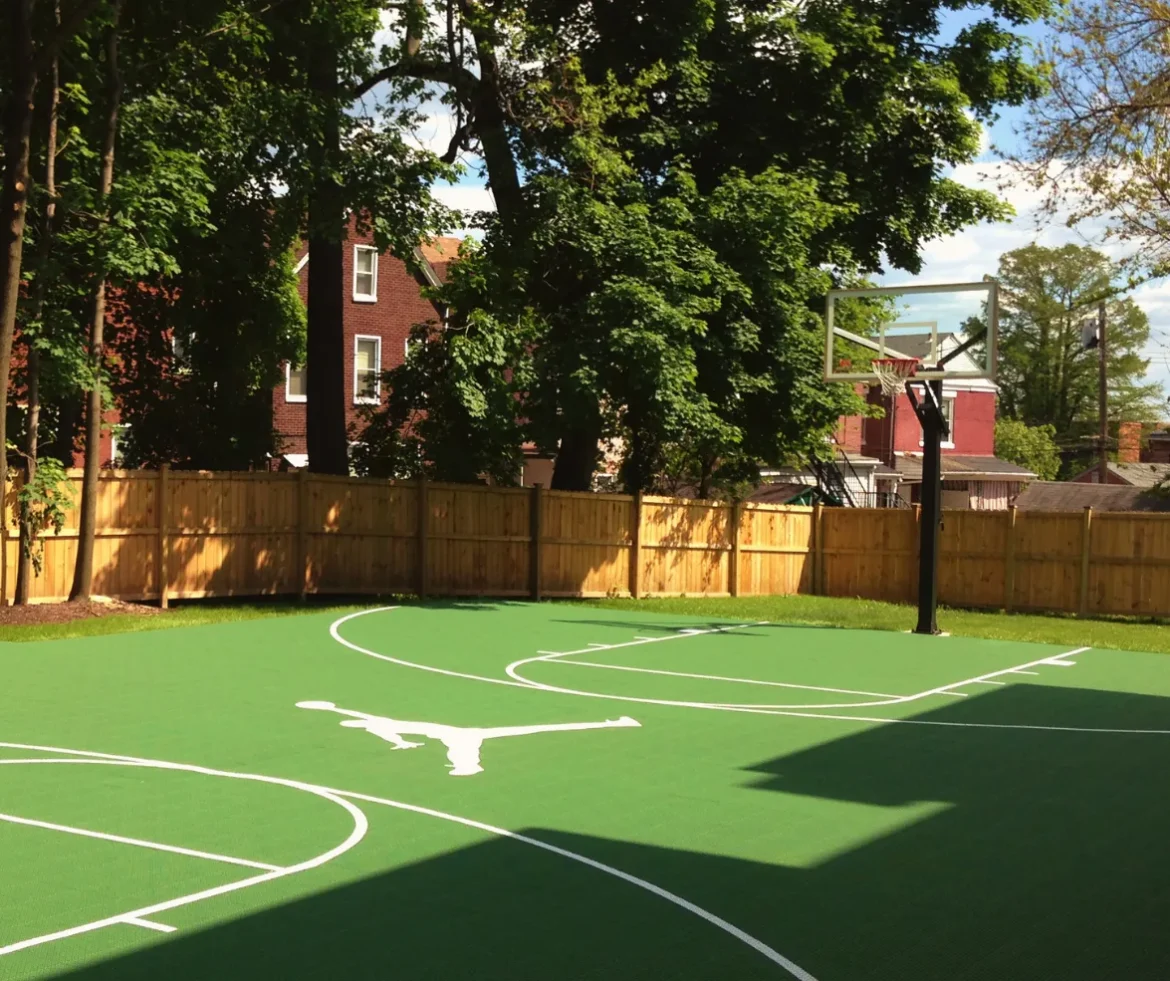
If you’re thinking about adding a backyard athletic court this year, there’s a good chance you’ve already asked yourself the big question: Will we actually be playing on it this summer?
The honest answer depends less on the court itself and more on where you’re starting.
Some homeowners are already sitting on the ideal foundation for a fast backyard court installation. Others may still need site prep, grading, or a new concrete pad before the first court tiles can even go down.
That’s why understanding your backyard court installation timeline early matters. A little planning upfront can help you decide if this is the right season to move forward or if it makes more sense to plan ahead for next spring.
Here’s what actually impacts the timeline and what to expect.
The Biggest Variable: Your Base
When people think about a backyard court installation, they usually focus on the visible part: the court surface, colors, hoops, or game lines.
In reality, the foundation is what drives the timeline.
If you already have a flat concrete or asphalt surface in good condition, you’re ahead. The site prep is done, so installation can start right away.
Starting from grass or uneven ground takes longer because the base has to be built first. The base work usually includes:
- Excavation and leveling
- Drainage planning
- Pouring the concrete pad or laying the asphalt
- Cure time before installation can begin
This is often the part homeowners underestimate when asking: “How long does it take to build a backyard court?”
The court tiles themselves move quickly. The foundation work is usually what determines whether a project stays on a shorter timeline or becomes a longer-term build.
Why Concrete Cure Time Matters
If your project includes pouring a new concrete pad, patience matters.
One of the most common questions homeowners ask is:
“How long does concrete need to cure before installing court tiles?”
While timelines can vary depending on weather and contractor recommendations, freshly poured concrete needs adequate time to cure before modular court tiles are installed. Rushing this step can affect long-term performance and surface stability.
That’s why planning ahead is especially important during the busy summer construction season. Contractors, weather delays, and cure timelines can all impact your overall backyard court installation timeline.
If you’re building from scratch, it’s smart to factor that into your expectations early rather than assuming the court itself is the long part of the process.
Once the Base Is Ready, Things Move Faster
Here’s the good news: once the surface is ready, the FlexCourt side of the project is typically the fastest part.
FlexCourt’s modular court tiles are designed for efficient installation, whether you’re creating a backyard basketball court, pickleball court, or multi-sport space for the family.
Many homeowners are surprised by how realistic a DIY backyard court installation can be. The modular tiles snap together without complicated equipment or specialty tools, making the installation process much more approachable than traditional court surfacing systems.
For homeowners with an existing pad already in place, the timeline from order to play is often measured in weeks rather than months.
That said, customization choices can affect production timing.
Features like:
- Custom court colors
- Game line layouts
- Personalized logos
- Multi-sport configurations
…may add additional lead time depending on the design and season.
That’s why it helps to finalize those decisions early once you decide to move forward.
Can You Install a Backyard Court This Summer?
This is where the “court now or court later” question becomes more practical than promotional.
If you already have a usable concrete or asphalt surface, there’s a good chance you still have time to enjoy your backyard sports court this season. Starting the conversation now can help you better understand what your specific installation timeline could look like.
But if you still need major site prep or a new concrete base, the timeline naturally gets tighter.
In some cases, planning ahead for next spring may actually lead to a smoother project experience than trying to rush construction during peak season.
That doesn’t mean you should wait to explore options. In fact, understanding your timeline now can help you make smarter decisions about scheduling, budgeting, and contractor availability.
Not sure if your space is ready? FlexCourt can help you understand your next step.
For many homeowners, the best time of year to build a backyard court starts with simply understanding the condition of the space they already have.
The Best Time to Start Depends on Your Base
There are usually two types of buyers when it comes to backyard court installation.
The first group already has a solid concrete or asphalt pad and can move relatively quickly once they choose a court design.
The second group is building from the ground up and benefits most from early planning, especially when coordinating excavation, concrete work, and installation schedules.
Neither approach is wrong. It simply comes down to your starting point.
If you’re wondering how to plan a backyard court installation, the best first step is getting a realistic timeline based on your actual space and not a generic estimate.
Because whether you’re hoping to play this summer or planning ahead for next season, understanding the process early makes everything easier.
Ready to Start Planning Your Court?
Whether you already have a pad in place or you’re still exploring ideas, FlexCourt can help you better understand your options, timeline, and next steps for your backyard court installation.
Get a quote today and start planning the right court for your space.